Seeing Beyond the Surface: A Journey to Essence
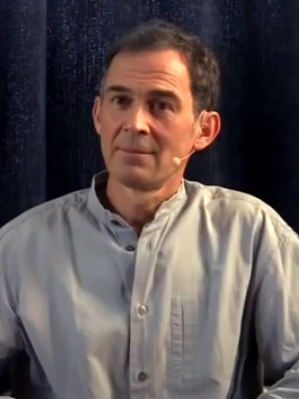
Rupert Spira's profound invitation, "Go to the place from which you are already looking," beckons us to explore the depths of our own awareness. This statement challenges us to recognize that our essence is not something to be sought externally; rather, it is the very foundation from which we perceive the world. In a society often preoccupied with external validation and material pursuits, this teaching serves as a gentle reminder to turn inward, to the source of our being, where true understanding and peace reside.
In a world filled with distractions and noise, the call to return to our essence is both timely and necessary. Spira's words encourage us to shift our focus from the incessant search for meaning outside ourselves to the rich interior landscape that already exists within. This journey inward is not merely an act of introspection; it is an awakening to the profound truth of our interconnectedness and the realization that our essence is already present, waiting to be recognized and embraced.
The image / the metaphor
The imagery in Spira's quote evokes a sense of returning home, suggesting that the act of looking is not a linear pursuit but rather a circular journey back to our true nature. The phrase "the place from which you are already looking" implies a depth of awareness that transcends the superficial layers of thought and perception. It invites us to consider the vantage point of our consciousness, urging us to recognize that our essence is not separate from our experience but is the very lens through which we perceive reality.
In the speaker's tradition
Rupert Spira's teachings are deeply rooted in the non-dual tradition, which emphasizes the unity of all existence and the illusion of separation. Concepts such as *sunyata* (emptiness) and *fana* (annihilation of the self) resonate with Spira's invitation to return to our essence. In this context, the act of looking becomes a practice of recognizing the interconnectedness of all things, where the observer and the observed are not distinct entities but expressions of the same underlying reality.
In the *Upanishads*, a foundational text of non-dual philosophy, we find similar sentiments expressed in the exploration of *Atman* (the self) and *Brahman* (the ultimate reality). The *Chandogya Upanishad* states, "Tat tvam asi," or "That thou art," reminding us that our true nature is not separate from the divine essence of the universe. This profound realization aligns with Spira's teaching, inviting us to recognize that the essence from which we look is, in fact, the same essence that permeates all existence.
Living the teaching
Consider a modern scenario where this teaching can be applied: a person grappling with feelings of inadequacy in their career. They may find themselves constantly striving for external validation, seeking promotions or accolades to feel worthy. By heeding Spira's invitation to "go to the place from which you are already looking," this individual can begin to shift their focus inward, recognizing that their worth is inherent and not contingent upon external achievements. This internal journey allows them to cultivate self-acceptance and to approach their work with a renewed sense of purpose, grounded in their true essence.
Another application of this teaching can be found in the realm of relationships. Imagine a couple facing conflict, each feeling misunderstood and disconnected. By embracing the practice of looking from their essence, they can move beyond the surface-level disagreements and begin to communicate from a place of vulnerability and authenticity. This shift fosters deeper understanding and compassion, allowing them to reconnect with the love that initially brought them together. In both scenarios, the act of returning to the essence transforms the experience, revealing the profound interconnectedness that lies beneath the surface.
A reflection
As we contemplate Spira's invitation to "go to the place from which you are already looking," we are called to reflect on our own lives and the ways in which we seek fulfillment. What distractions or external validations have we allowed to cloud our perception of our true essence? In this moment of introspection, consider: how might your life change if you were to embrace the understanding that your worth and essence are already present within you, waiting to be recognized? This question invites us to embark on a journey of self-discovery, leading us back to the profound truth of our interconnected existence.



Join the BrightStar Community
Stay connected with daily inspiration, event announcements, and community wisdom